60% of Israelis favor unity, but right-wing voters split on next leader
A new poll shows the opposition leads by six seats ahead of Tuesday's election, while street interviews in Jerusalem reveal deep divisions over security, religion, and loyalty to Benjamin Netanyahu.
By Adrian Flores ·

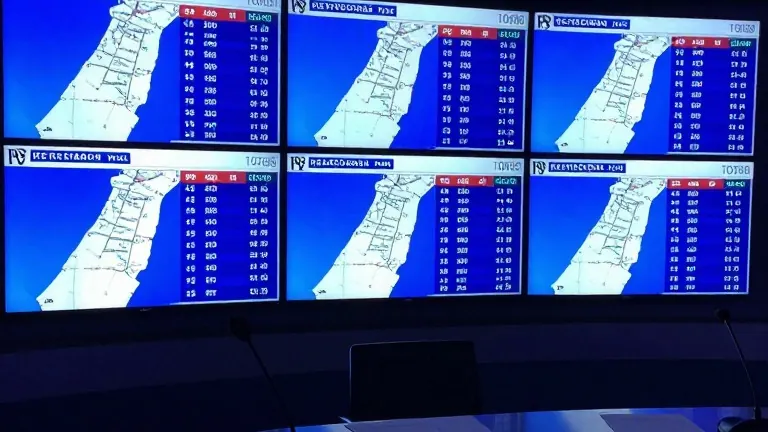
Sixty percent of Israelis now say they would prefer a unity government if Tuesday's election does not produce a clear winner. This figure comes from a Maariv poll by Lazar Research, released on Friday, which also shows the opposition bloc widening its lead over the ruling coalition.
The opposition currently holds a six-seat advantage in a Knesset of 120 seats. A majority of 61 seats is required to form a government. Despite this overall gap, the two largest parties are separated by only two seats. The coalition bloc has weakened by three seats compared to the previous week's polling. Voter certainty has risen to 81%, suggesting turnout may exceed the 71% recorded in the 2022 election.
In Jerusalem, residents are preparing to vote in the 26th Knesset elections. The city's right-wing electorate is divided on who should lead the next government. Opinions remain sharply split on whether Prime Minister Benjamin Netanyahu should remain in power. Security, religion, and loyalty remain the core values shared by these voters.
The Jerusalem Post conducted street interviews at Shuk Mahane Yehuda and on Ben Yehuda Street to gauge public sentiment. All voters interviewed leaned right but disagreed on which party should lead. The interviewees were randomized and remained anonymous, with only their gender recorded. These local voters help dictate the political dynamic of the country for the next four years.
Many Jerusalem residents expressed strong loyalty to Netanyahu. Two voters said they would vote to re-elect him. One stated, “He is a great ally to America, America is a great ally to him.” Another said, “his policies are the right ones to follow.” These comments reflect a segment of the electorate that prioritizes international relations and established policy over a change in leadership.
Other voters remain unsure of their choice. Many said they rely on their families to influence their decisions. A woman in the Nachlaot neighborhood said she wants a government that “supports Torah learning” and
lower prices.
She admitted, “we love Netanyahu, but I don't understand too much politics, so I'm not sure, I have to ask my husband what exactly we are doing.”
Some citizens resent the current government and plan to vote for rivals. One man said, “probably something not in the current government. I'm not sure I can explain, to be honest. I don't like part of their attitude.” A supporter of former prime minister Naftali Bennett said, “the list of people that are with him are going to do good for the country and want to make good rules in Israel.”
The Bennett supporter added, “He really cares about the country and not about populism or making money for himself.” Other voters cited religious alignment as a reason to support parties like Shas and the Religious Zionist Party. They described these parties as “good for the religious people, the Haredi people.”
Finance Minister Bezalel Smotrich received endorsements from two individuals. One said, “I think I want to vote Smotrich because I'm part of the party.. and I believe in the same values, and I think it's the best way for Israel, for the next [few] years.” Another cited security, or bitachon, and his connection to the Religious Zionist community.
National Security Minister Itamar Ben-Gvir was named by a man in Mahane Yehuda who prioritizes safety. Many voters said their rabbis advise them not to share who they plan to support. A woman in Mahane Yehuda who is leaning toward Bennett said, “I just know I don’t want Bibi.” Most interviewees, however, said they would back parties in the current coalition, with one woman in Nachlaot stating, “For sure we want right wing.”
Source: The Jerusalem Post