No bloc likely to hit 61-seat threshold in Israel's tight election
Polls show Benjamin Netanyahu and Gadi Eisenkot tied, but neither side has enough support to form a stable government, raising the risk of another political crisis.
By Eleanor Clarke ·
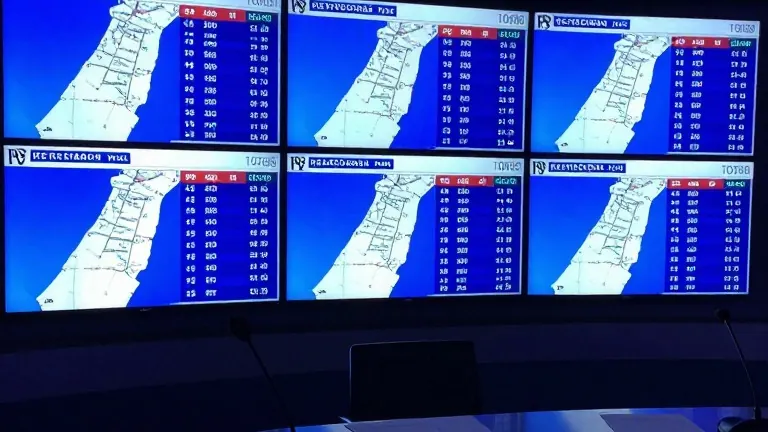
Israelis voted on Tuesday in a race where neither leading candidate appears capable of securing the 61 seats required to form a majority government. Polling released on Friday indicated that incumbent Prime Minister Benjamin Netanyahu and former military chief Gadi Eisenkot are in a near tie for the premiership. This lack of a clear path to power suggests a long period of coalition building may follow the count.
The campaign focused heavily on security and the government’s response to the October 7 attacks. The opposition bloc criticized Netanyahu for what they described as a failure of security, which resulted in the death of nearly 1,200 people and the capture of 251 hostages. They demanded an independent commission of inquiry, a step Netanyahu resisted by arguing it would be biased against him.
Eisenkot leads the Yashar Party, formed only last year, which anchors the change bloc. This group includes former Prime Minister Naftali Bennett, right-winger Avigdor Lieberman, and left-leaning former general Yair Golan. They share the goal of removing Netanyahu from power despite ideological differences. Netanyahu relies on his existing coalition of far-right and ultra-Orthodox parties, the most right-wing alliance in Israeli history.
Two Arab party blocs are also in the race, representing about one-fifth of the population. While they could theoretically act as kingmakers, all but one major Jewish party has ruled out governing with them. This dynamic complicates the arithmetic for both main contenders. The opposition also highlighted threats to democracy, citing Netanyahu’s ongoing corruption trial and his push for judicial reforms that sparked mass protests before the war.
In the final days of the campaign, Channel 12 reported that Netanyahu sought a military confrontation with Iran before the vote but was blocked by his military chief, Eyal Zamir. CNN reported that Netanyahu also asked US President Donald Trump to authorize new strikes, which Trump refused. Netanyahu denied both reports. He also posted an AI-generated image of a nuclear bomb hitting Tel Aviv, a move Eisenkot called hysterical.
Conscription remains a dividing issue. Netanyahu’s government has not enforced a Supreme Court ruling requiring ultra-Orthodox men in full-time religious study to serve in the military. Eisenkot, who supports settlements in the West Bank, pledged to end Hamas rule in Gaza within 18 months. He also proposed creating conditions for Palestinian autonomy under Israeli security control.
Exit polls will be published at 22:00 local time. Votes from soldiers and reservists will be counted starting Wednesday, potentially aiding right-wing parties with strong support in that demographic. Israel held five elections between 2019 and 2022 due to similar coalition struggles. If no bloc reaches a majority, new elections may be called, leaving Netanyahu as interim prime minister.
Source: BBC News